
THE BLUE WHALE

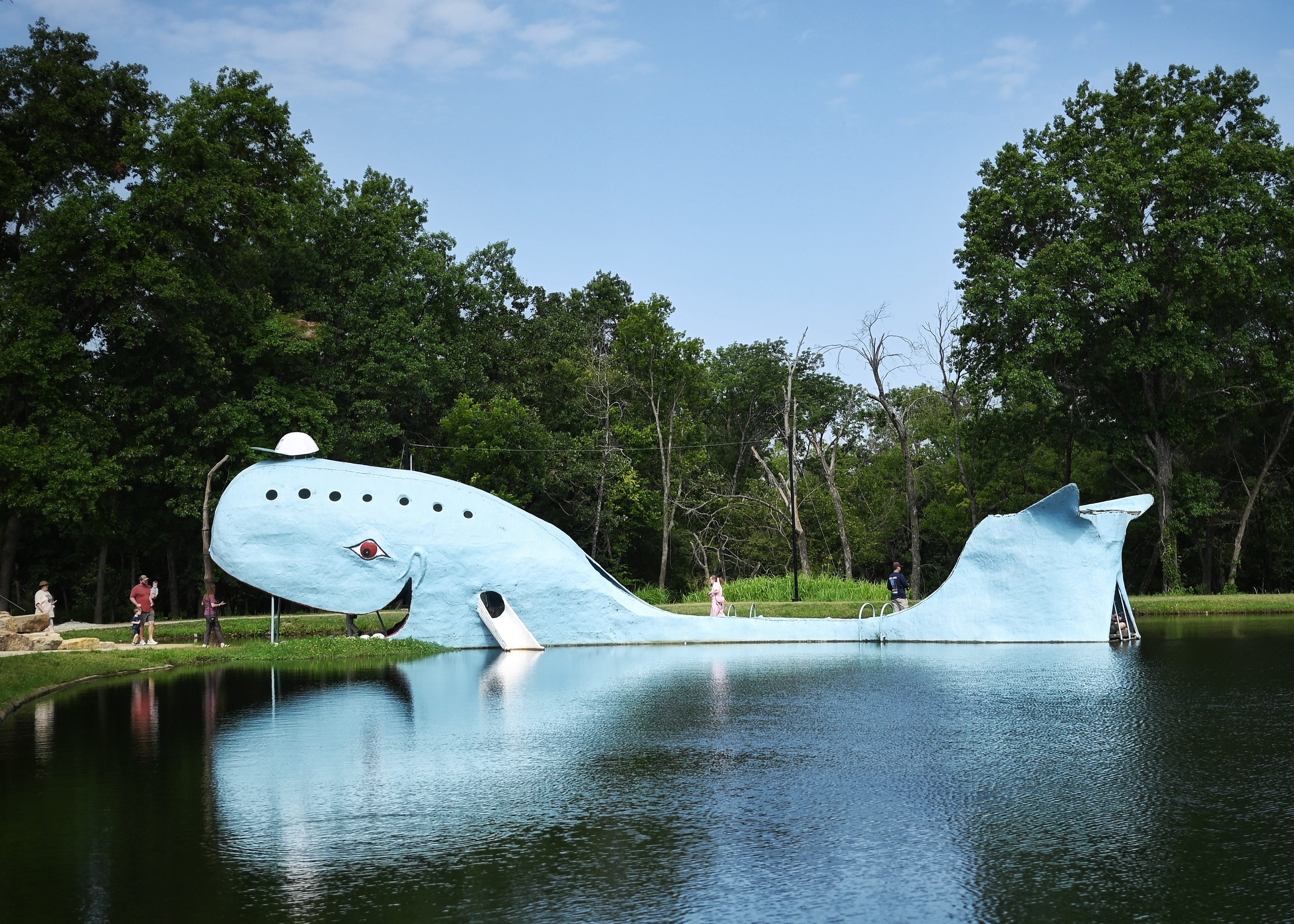
There was a fried catfish place in Catoosa that was a favorite of my dad’s. We would often gather there after a Sunday church service or for no reason at all to gorge ourselves on catfish and hushpuppies. There were multiple routes Dad could drive to get to this restaurant, the highway being the most direct way, but he often chose to take the back country road that eventually led to the old Route 66. This was my favorite drive because it took us past the Blue Whale.
The Blue Whale was built by Hugh S. Davis, who started the project as a gift to his wife and grandchildren. Completed in 1972, the Blue Whale became a water playground for visitors from all over and an iconic Route 66 attraction. I don’t know when things declined, but eventually the whale was left abandoned to nature. I’ve always remembered it as an abandoned spot with paint flaking from the whale and vegetation grown up all around it. Every time we passed it by, it seemed a little worse for wear and every time I imagined what the Blue Whale could be. I would dream of jumping off the tail end or going down the slides. I imagined taking breaks from the heat by lying on my back in the shade of his big open mouth. I just knew that is was the most magical, wonderful place to swim and play if it was not covered in vines and the pond over run with water clovers. One day, Dad’s favorite restaurant closed and we no longer made that drive to Catoosa. There was no reason to pass by the whale and pine for the days when it could be played on. I haven’t past by there in ages.
The City of Catoosa owns the Blue Whale now and have brought the whale back to its original beauty. There are plans to extend the park, but for now it’s open with a brand new Welcome Center. You can picnic and fish in the pond. No swimming, but there are turtles to feed. There is also lots of information on Hugh S Davis and his wife Zelta. Hugh was an zoologist who worked at the Tulsa zoo. He was dedicated to spreading education and built an Ark that would later become the Alligator Ranch and Natures Acres. He and Zelta spent their days milking poisonous snakes and educating children on reptiles. Zelta often wrapped her body in snakes during wildlife shows. The alligators roamed free. One nearly killed Zelta. Big Betty, the alligator, grabbed Zelta’s hand and dragged her into the pond. Hugh was bit by a venomous snake during one wildlife show and Zelta saved his life (probably more than once) by using a knife to open the wound to bleed out the venom. Eventually, they retired from this life of dangerous reptiles and it was during his bored retirement years when Hugh got the idea for the whale. They closed the whale to the public in 1988 with threats of being shot for trespassing. Hugh passed away in 1990 with Zelta following in 2001.
Hugh and Zelta and a reptile farm. They could almost be Carl and Ellie from Up if Up was directed by a Coen brother.
I stopped by the newly renovated whale as I headed out of town on Saturday. For the first time ever, I was able to park and walk down the whale. I stepped inside his wide open mouth and strolled all the way to the tail before strolling back. It is a popular stop on the Mother Road now, with groups of people posing for their shots with the whale. One group of elderly women being led by a woman my age asked if I would take a group photo for them and then they handed me four different phones. I think they were retired Oklahoma teachers. I did manage to get a couple of photos of the whale without people, but I’m glad there were people there to work around. It just shows how loved the Blue Whale truly is, from those of us who can remember it’s derelict times to those seeing it for the first time.